Smoke, mirrors and megabits: The confusing and misleading reality of broadband pricing
On this page
Acknowledgements
This report was written by Felicia Magdalinski, Martha Hankins, and Tess Thompson, with input and support from Chloe Maughan and Conn Doherty
Introduction
Reliable broadband is generally accepted as a necessity for participating in modern life. It’s essential for managing bills, accessing benefits, school, work, and much more. So taking out a broadband contract should be a straightforward process. But in reality, pricing structures in this market can be confusing, making it difficult for people to secure the best deal. Common practices include bundling multiple services into one contract, price hikes during a contract, and ‘hidden’ deals only available to consumers who negotiate with their provider when their contract ends. These all make it difficult for consumers to access the important information they need to choose the right products and services. In this report, we explore the challenges consumers face navigating the broadband market at three key points: when taking out a new contract, navigating mid contract price rises (MCPRs), and when their broadband contract comes to an end.
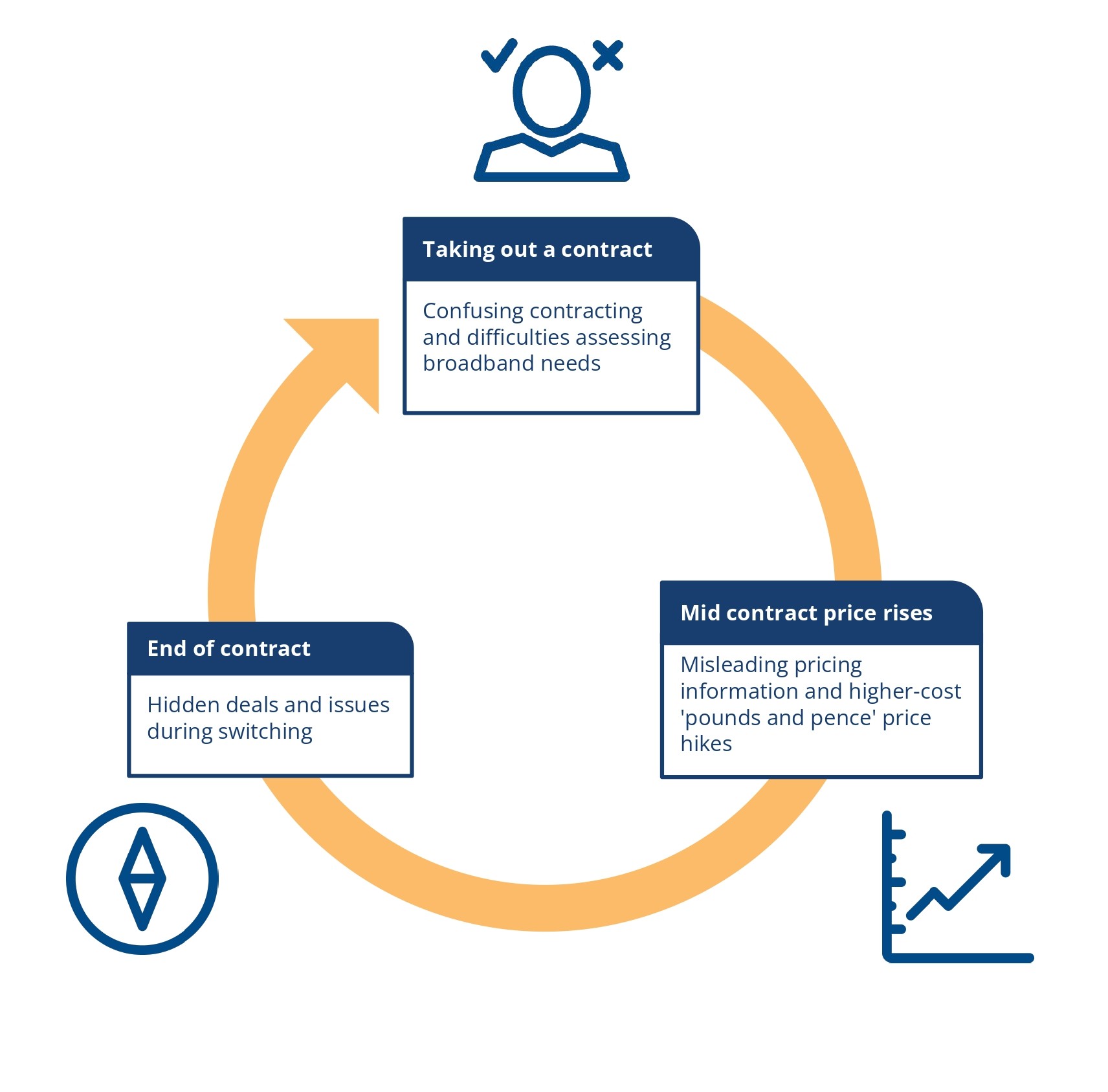
The broadband market shouldn’t be this opaque, and Ofcom has taken some steps to make the market work better for consumers. In 2024 the regulator introduced One Touch Switch to simplify the process of moving providers, and in early 2025 it banned inflation-linked MCPRs. But, as we’ll demonstrate below, so far Ofcom’s interventions have not gone far enough, and there is still much more to be done to make the broadband market straightforward to navigate. We commissioned a survey of 8,000 UK adults to assess consumers’ experiences engaging with the broadband market, what they find difficult and confusing, and how they react to pricing practices like MCPRs. Our findings paint a clear picture - the broadband market isn’t functioning well for consumers, and Ofcom must act.
Key findings & recommendations:
Changes to MCPRs mean broadband price increases have out-paced inflation, making affordability issues worse than before Ofcom’s intervention - with the average bill-payer seeing an 11.1% increase this April. We recommend an immediate ban on the practice of MCPRs.
Too many of the best broadband deals are currently hidden behind a lengthy process of negotiation, making it hard for consumers to know if they’re getting a good deal. To address this, Ofcom should equip consumers with better knowledge around how much other consumers are paying for similar speeds, by collecting and publishing consumer spend data for the broadband market.
90% of customers are unable to choose the best broadband option which meets their needs. Ofcom must identify ways to empower consumers to make good choices, including exploring alternative ways of explaining and advertising broadband speeds.
Given that negotiating with a provider at the end of a contract is the most common action consumers take and that 1 in 4 consumers who negotiated (24%) when taking out their most recent broadband contract said that the process was difficult, Ofcom must:
Simplify the process of recontracting and end hidden deals
Investigate customers' experiences of One Touch Switch and identify ways to improve experiences for those who do choose to switch.
Consumers in vulnerable circumstances - such as those experiencing financial difficulty or poor mental health and those who are not confident using the internet - are consistently more likely to experience issues navigating the broadband market. Ofcom should implement interventions at every step of the broadband journey to ensure consumers in vulnerable circumstances get appropriate support and fair access to good outcomes.
Taking out a contract
The initial stages of the consumer journey for broadband services present challenges for many consumers. The current market structure involves complex pricing models and a wide array of service options, including bundling, which are intended to add value and choice but can create a sludgey [1] process for many. Contract terms can be complicated and many consumers face uncertainty over contract elements such as contract length or upload/download speeds. Packages with MCPRs can appear to be lower cost by presenting cheaper up-front pricing, even though prices will increase later on in the contract. Even the design of provider websites can play a role, as they often feature design tactics that can confuse consumers and even influence their behaviour. All these factors can make shopping around and taking out a new contract a daunting task.
Our survey data shows that 1 in 4 consumers (25%) found the process of securing their most recent contract to be confusing. And this is even more prevalent among certain vulnerable groups of consumers, including individuals with mental health problems (34%), those reporting financial difficulty (37%), and those with lower digital confidence (54%). We saw similar patterns when asking if consumers found the process of taking out their most recent contract stressful and time consuming.
Barriers to informed decision-making
It’s not surprising that many consumers say the process of taking out a broadband contract is confusing, as contract terms, usage needs and costs in broadband can all be complicated. Worryingly, some groups are even more likely to struggle choosing the right broadband package. While 3 in 10 (31%) UK adults don’t understand their broadband speed needs well, that figure rises to 41% of older people (65+) and 41% of people experiencing financial difficulty. In addition, many consumers don’t understand common policies in broadband contracts that might impact their usage. Specifically, approximately 1 in 4 consumers (24%) report a limited understanding of fair use limits or throttling policies within their contracts [2].
While 1 in 4 consumers (25%) found the process of securing their most recent contract to be confusing, our behavioural research into online design tactics suggests that far more people might be making the wrong choice in practice. We ran an experiment to test the impact of certain tactics on respondents’ ability to make the right choice based on specific criteria in multiple online shopping environments, including choosing a broadband package. While we did see that online design tactics impact consumers’ decision making, more striking was that even without any of these tactics present, 90% of respondents chose an incorrect broadband package. This suggests that there is something fundamentally confusing about the way information is presented to consumers and how products are packaged in the broadband market.
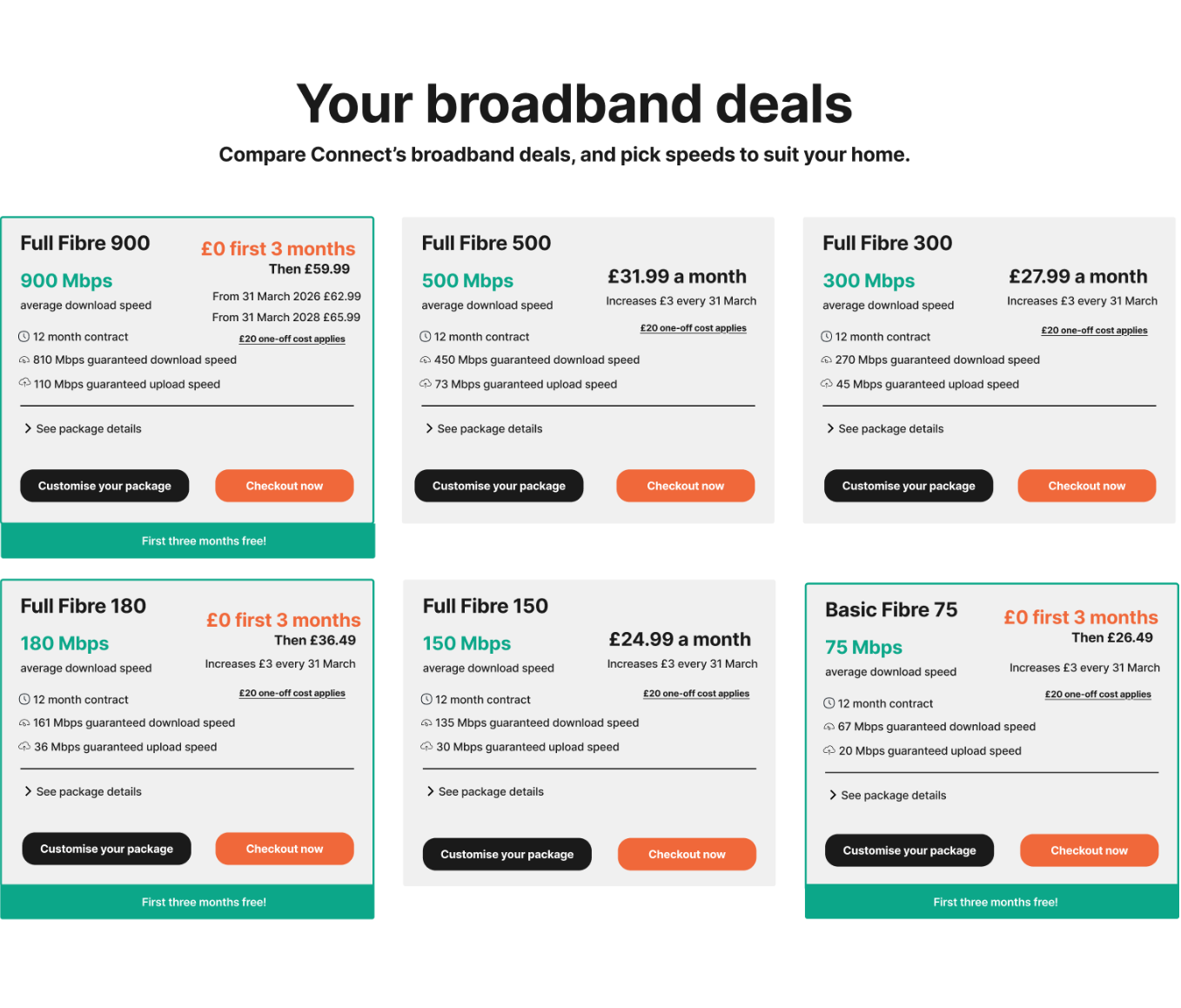
Clearly, the current process of taking out a contract doesn't work well for everyone. Ofcom has made it a priority to ensure that consumers experiencing vulnerability are treated fairly, and we’re worried that in the broadband contracting context, that isn’t the case.
Mid contract price rises
Even after navigating all the pricing hurdles to take out a broadband contract, for most consumers, that price is not fixed throughout the contract period. Unlike in other essential services, such as energy or other utilities, the telecoms market is unique in allowing for MCPRs - raising the monthly cost of bills in the middle of a contract. We have long called for a complete ban of this practice. Our newest research confirms that these price rises are not just unnecessary, but actively harm consumers.
Ofcom’s previous interventions are not enough
In January 2025, Ofcom banned inflation-linked MCPRs, making it mandatory for providers to spell out any MCPRs in ‘pounds and pence’ at the point of sale.
But in practice, Ofcom’s new rules have led to prices increasing by more than they would have under the previous rules. Previously, MCPRs were often set based on terms like “prices will rise by Consumer Price Index (CPI) + 3.9%”. Uswitch has estimated that this April the average broadband bill-payer faced an 11.1% increase, more than triple the current 3.2% inflation rate and higher than they would have seen under the ‘inflation plus a fixed percent’ approach with most providers. Since many providers use flat-rate increases across their packages, a household with a low-cost package could face the same value price increase as a household with a higher-cost premium package. This means the change is also regressive as this translates to substantially higher percentage increases for those on lower-cost contracts. So by pursuing improved clarity over broadband price increases, Ofcom’s intervention has in practice driven up costs, with lower income consumers likely to be hit harder.
And despite this change aiming to increase clarity and pricing transparency for customers, many still have a low awareness of MCPRs and a poor understanding of how they apply. 2 in 5 (40%) of those who make the broadband decisions for their household who have fixed-term contracts could not recall seeing information on whether there would be any MCPRs or not when they took out their contract [3]. This increases to 49% for broadband decision-makers who are experiencing financial difficulty, and to 46% for decision-makers aged 18-24. A further 1 in 4 (25%) broadband consumers said that they do not have a good understanding of how much the price of their contract could change over time. This increases to a third (33%) for those experiencing financial difficulty and to 35% for those with mental health difficulties who said that their condition impacts them a lot. The ‘pounds and pence’ rule was meant to increase transparency for consumers, but clearly this hasn’t worked in practice. This doesn’t mean that Ofcom shouldn’t have intervened, but rather that they should have taken a stronger approach by banning MCPRs completely.
MCPRs confuse and mislead consumers
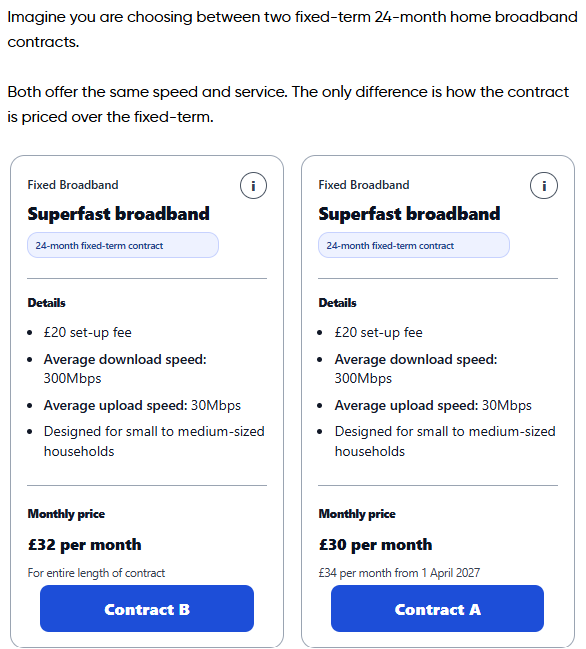
In our latest research, we tested the impact of MCPRs on how consumers make decisions when taking out a new fixed-term contract. We asked respondents to choose between two hypothetical, but realistic, fixed-term broadband contracts with identical speeds, services, and contract length [4]. The only difference was found in the pricing structure, where one plan had a fixed price throughout the contract period, and the other had a lower headline price followed by an MCPR. For half of the respondents the two contracts had the same overall cost and for the other half, the total cost was higher for those choosing the MCPR contract.
First scenario: contract A and contract B cost the same over the course of the 24 month contract, if started in April 2026
Second scenario: contract A costs more than contract B over the course of the 24 month contract, if started in April 2026
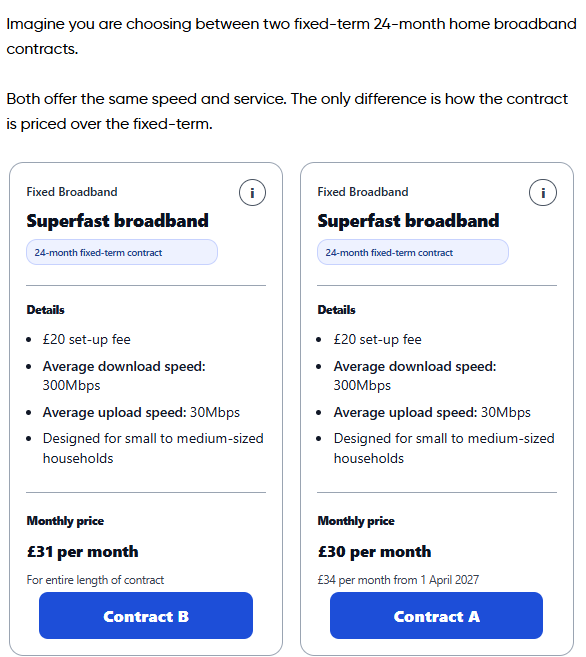
We wanted to capture consumers’ preferences for contracts with or without an MCPR, but also whether or not the presence of an MCPR would impact consumers’ perception of value or even influence people to choose a contract that was more expensive. While in the first scenario above, consumers are choosing between two options that would cost them the same amount over the total length of the contract, in the second scenario anyone choosing the option with an MCPR would end up paying more overall. The results show us that MCPRs confuse consumers and lead to poor decision-making. In the second scenario, 1 in 5 (22%) UK adults still chose this poorer-value option [5].
Concerningly, certain groups are significantly more likely to choose this option. Younger people (18-34) are 77% more likely than the oldest age group (65+) to choose the poorer value option, and those experiencing financial difficulty are 54% more likely to choose this option than those who are financially comfortable [6]. This suggests that pricing structures including MCPRs can lead a significant proportion of consumers to overpay for services, with some of those least able to afford it hit the hardest.
Our results also raise concerns that MCPRs make it difficult for consumers to accurately compare and assess the value of different contracts. Out of those who chose the MCPR plan in either scenario, over a third (37%) said that the main reason for their choice was that it was the cheaper deal, despite this being incorrect. This confusion is widespread, as even among those who said that they prioritise total contract cost over the immediate monthly price they pay, 1 in 5 (21%) opted for the more expensive MCPR plan - acting against their own stated preference.
Not only are MCPRs leading to poor outcomes, but consumers prefer truly fixed-price contracts. Two thirds (66%) chose the fixed-price contract over the MCPR plan when the total contract costs were the same, expressing a strong preference for fixed prices in this scenario [7].
We saw consumer confusion about MCPRs before Ofcom introduced the new ‘pounds and pence’ rule and we’re clearly still seeing it now. At the same time, prices are rising by more than they would have under previous rules. By any measure, this intervention has not delivered better outcomes for consumers.
End of contract
Our previous work has shown that at the end of a fixed term telecoms contract, consumers can see their bill surge if they don’t take action. Consumers who stay with their existing provider may not have access to the same discounted deals available to new customers, a practice known as the ‘loyalty penalty’. At the same time, prices often shoot up when the initial fixed term period of a broadband contract ends. Coupled together, this can lead loyal consumers who are out of their original contract term to pay more than other customers for the same service. Our 2018 supercomplaint estimated this could be leading to affected UK households overspending by £113 per household per year [8]. To access the best deals in the market, consumers have two main options - call up their existing provider and negotiate, or switch to a new provider. But each of those options brings its own set of problems.
Negotiation
Negotiating with your broadband provider when your fixed term contract ends is very common. Our research from last year found that it is the most common action consumers take at the end of a fixed term contract, with 48% negotiating, 28% switching and 18% taking out a new deal with the same provider without negotiating. Our more recent research showed that overall, 1 in 4 consumers who negotiated (24%) when taking out their most recent broadband contract said that the process was difficult, increasing to 34% for those experiencing financial difficulty.
When asked about each step of the negotiation process in turn, we found that 78% of those who negotiated on the phone found at least one step of the process difficult. And that research also found that 2 in 3 (66%) people who negotiated with their provider on the phone experienced at least one negative consequence as a result, such as feeling stressed or experiencing a negative impact on their mental health.
Even after navigating the negotiation process, consumers don’t know whether or not the deal they secure is actually good value in comparison to what others in the market are paying. With many of the best prices gatekept behind negotiation, consumers can’t rely on published deal prices to know what others might be paying for similar services. Publicly available broadband spend data breaking down the average cost of different broadband speeds and packages would help consumers assess what deals represent good value in this market, but Ofcom doesn’t currently publish that information. We’ve seen significant disparities in prices different consumers are paying for similar broadband packages.
And success securing a better deal by negotiation seems to work better for those who are already broadband savvy. Those who are very confident using the internet are 22% more likely to secure a deal than those who are not [9].
Switching
Switching, though less popular, is also an effective option to get access to better deals. Switchers typically pay less on their broadband deals than negotiators. But just 29% of broadband consumers switch. In 2024, Ofcom introduced One Touch Switch (OTS). This was intended to make it easier and quicker for consumers to move between providers, by allowing consumers to change broadband providers by only contacting their new provider to organise the switch. But awareness of this process is low - half of fixed broadband consumers (51%) don’t know about OTS [10]. Furthermore, the rollout of this process hasn’t gone to plan, and Ofcom had to implement an enforcement programme to ensure all telecoms consumers could actually access this improved system. In our research, we’ve seen this play out with consumers being let down in multiple ways when attempting to switch. We found that over one in five (21%) consumers that switched providers for fixed broadband since the start of last year who tried to only make contact with their new provider still had to make contact with both their old and new provider to make the switch [11]. Furthermore, more than 2 in 5 (45%) of these consumers experienced a problem with the process.
When broadband services go down during a switch, this can leave people without an essential service for lengthy periods of time. Our research shows that for consumers who switched providers since the start of last year, for 10% of those who experienced service disruption the issue lasted 4 to 7 days, and for a further 10% it lasted over a week. And only 21% of those who experienced a service disruption automatically received the monetary compensation they were entitled to under Ofcom’s rules [12].
Even if most people who switch don’t experience these issues, the possibility of encountering an issue and the uncertainty over whether or not you might lose access to essential broadband connection puts many people off switching. There are also other valid reasons not to switch - many people report concerns about the service quality of other providers or the coverage in their area, or don’t think there is any benefit to switching providers, or simply like the service their current provider offers and don’t want to switch.
Despite having many good reasons not to switch, the nearly 3 in 5 broadband consumers (58%) who don’t do this are at risk of paying a financial penalty in order to stay with their provider [13].
The fallout
Negotiating, switching, and doing nothing all bear risk for broadband consumers. There is no solution that perfectly balances accessing better deals, maintaining service connection, and avoiding difficult and time consuming processes that might cause knock on negative impacts. And for those who do take action in the hopes of accessing better prices, they end up back at the beginning of the telecoms consumer journey cycle all over again. Consumers don’t just have to navigate the pitfalls of contracting, working out their usage and broadband speed needs, and deciphering bundling options once in this market, but potentially every time their contract ends.
Conclusion
We’re worried that pricing practices in the broadband market are making it harder for consumers to navigate this essential service. Ofcom’s previous interventions to curb MCPRs and make switching easier simply have not gone far enough to make this market straightforward for consumers to navigate. Some of the solutions to this are clear. Ofcom should ban MCPRs, bringing telecoms in line with other markets. Ofcom should also publish improved data on consumer spending in the broadband market to improve transparency and help consumers to evaluate whether they are being offered a good deal.
Steps Ofcom should take immediately:
Ban MCPRs entirely. The monthly price of a telecoms contract should stay the same for the entire duration of the contract.
Collect consumer spend data for the broadband market and publish it in an easily-understandable way to allow consumers to assess the value of deals on offer. This should go beyond what is currently published in Ofcom’s Pricing and Consumer Engagement Report so that consumers can better understand what other customers are paying for similar speeds.
Other solutions, however, will require more information to get right. Our research raises serious concerns about consumers’ experiences with broadband contracting, the barriers they face to making effective and informed decisions, and the problems with both negotiation and switching which are necessary to avoid paying the loyalty penalty. We’ve also shown that consumers in vulnerable circumstances - such as those with mental health problems, those who are experiencing financial difficulty, and those with low digital confidence - may be more likely to experience problems navigating the broadband market. We see failings with broadband pricing across the whole consumer journey, and this warrants a broad investigation by Ofcom into whether consumers could get better outcomes through fairer pricing practices.
Ofcom should identify solutions to meet these objectives:
Empower consumers to easily identify broadband products that best meet their needs.
To support this, Ofcom should explore alternative ways of explaining and advertising broadband speeds to ensure consumers have the information they need to make a good choice.
Simplify the process of recontracing so consumers who want to stay with their existing broadband provider have straightforward access to good deals.
End hidden deals and ensure information on the best deals from a provider is readily and easily available.
As part of this, Ofcom should carry out further research regarding customers' experiences of OTS and set out clear recommendations to boost awareness and improve experiences for those who do choose to switch.
Ensure consumers in vulnerable circumstances get fair access to good outcomes and that they receive appropriate support to effectively navigate the market.
Ofcom should explore interventions at every step of the broadband journey to effectively deliver on their priority that consumers in vulnerable circumstances are treated fairly.
We’ve long argued that specific challenges in the broadband market - including the loyalty penalty, MCPRs, and reliance on negotiation to get the best deal - pose barriers to good consumer outcomes. These are not one-off issues, but rather indicative of deep-rooted problems throughout the broadband market. Ofcom needs to act to tackle poor pricing practices and ensure broadband consumers are actually set up to succeed.
Methodology
Citizens Advice commissioned Opinium to survey 8,000 UK adults to find out about their experiences navigating the broadband market and taking out contracts. Fieldwork took place between 13 and 26 March 2026 and the survey was disseminated online. Survey results were weighted to be nationally representative of the UK adult population (18+), on age interlocked with gender, ethnicity, disability status, working status, social grade, and region. Opinium also conducted regression analyses to assess whether consumers in certain demographic groups were more likely to experience certain outcomes in the broadband market.
[1] Sludge is a term used to describe a process full of extra steps and hurdles that make it harder and slower for consumers to get the outcome they want.
[2] Fair Usage limits and throttling refers to the intentional capping or slowing down of internet data speeds by an Internet Service Provider (ISP) or mobile carrier. These policies are primarily used to manage network congestion, enforce fair usage, or regulate data limits.
[3] This figure includes those who answered ‘no’ and ‘not sure / can’t remember’ when asked if they remember seeing information about whether there would be any mid-contract annual price increases to the monthly cost when they signed up for their most recent broadband contract.
[4] All survey data used from questions relating to this hypothetical scenario exclude those who did not express a preference for either contract.
[5] All hypothetical contract data excludes respondents who answered that they had no preference between contract A and contract B.
[6] Results from a binary logistic regression, only respondents who stated a preference were included. The model also included disability status and type of contract (fixed-term taken out since January 2025, or before, rolling contracts, and fixed-term but out of term) as independent variables.
[7] All hypothetical contract data excludes respondents who answered that they had no preference between contract A and contract B.
[8] £113 is the difference between the cheapest basic broadband contract and the price customers pay after the initial contract period ends as of report publication in 2018.
[9] ‘Those who are not’ includes consumers who said they were neither confident nor not confident using the internet, those who are not very confident, and not at all confident. Based on a regression model of broadband consumers who tried to negotiate with either their new or previous provider. The other variables included in the model were: understanding of broadband usage needs, and type of contract (fixed-term taken out since January 2025, or before, rolling contracts, and fixed-term but out of term).
[10] We asked respondents before the survey how much, if anything, they knew about One Touch Switching for broadband and landline. This figure includes all those who answered ‘I did not know about it.’
[11] This sample includes those who said they had taken out their most recent broadband contract after 17 January 2025.
[12] This sample includes those who said they had taken out their most recent broadband contract after 17 January 2025.
[13] This figure includes those who said that they or someone in their household took out another contract with the same provider and those who said they did something else (not switching or remaining with their provider).